

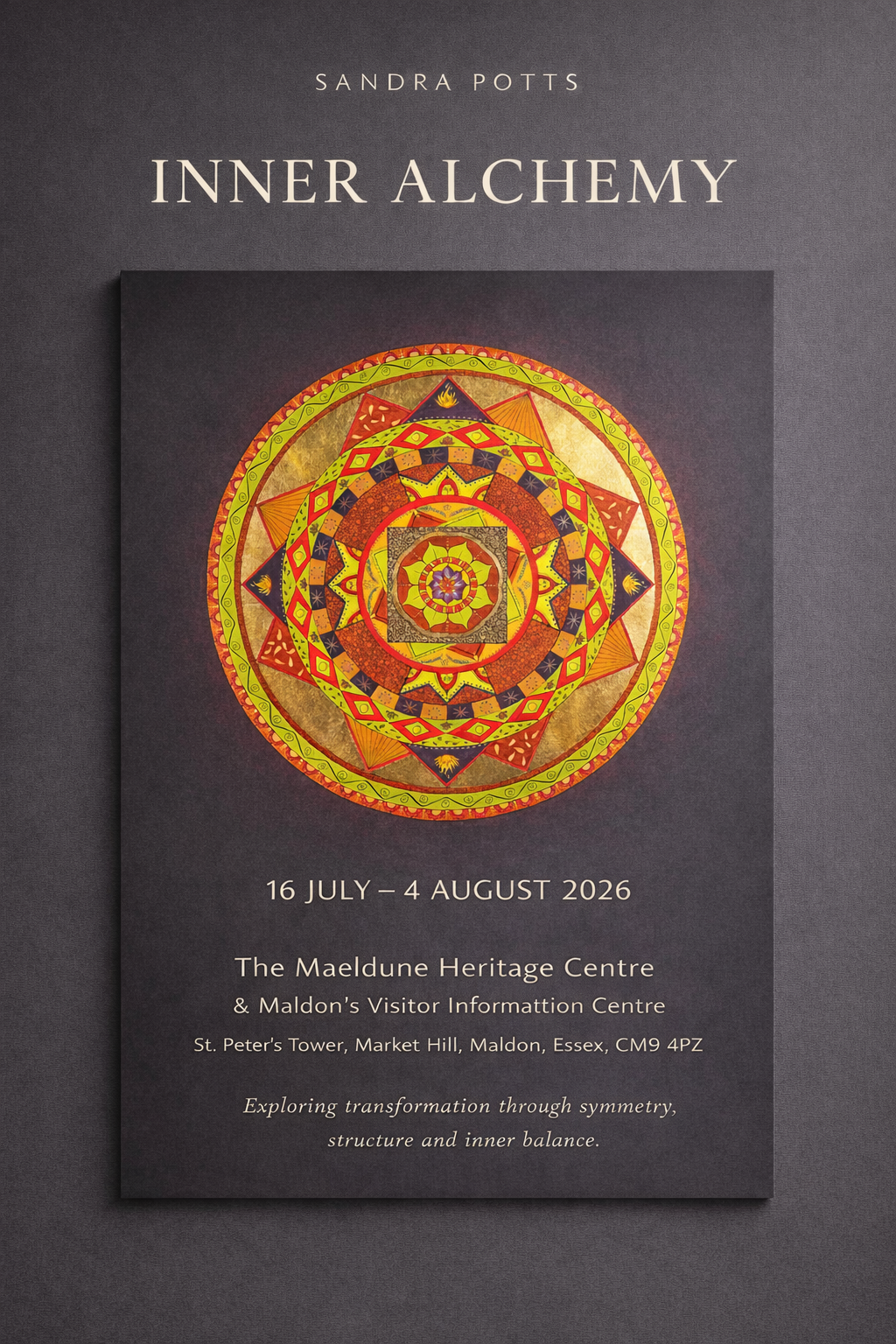
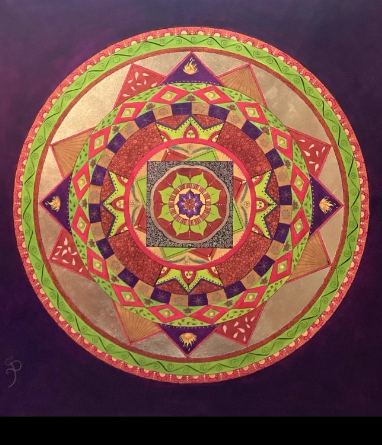
An exhibition featuring Sandra Potts 16th July to 4th August 2026
‘Themed Mandalas’.
About the Artist:
Born in London in 1953, my family and I moved to Maldon in 1991. A mother of three boys, I have always had a passion for art and creativity, but my journey back into drawing and painting as a full time hobby began at the age of 52, and since then I’ve explored a variety of mediums—graphite, watercolour, pastels, oils, acrylics, and more.
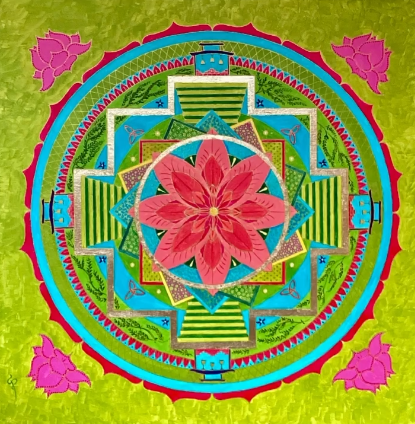
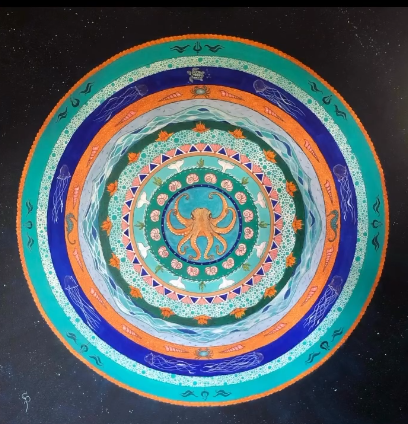
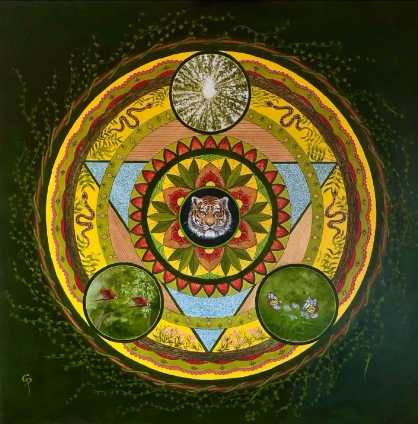
About ten years ago, I began experimenting with geometry and symbolism, a practice that has since evolved into my latest series of ‘themed mandalas.’
These works are a reflection of precision, flow, and creativity, blending structure with expressive design.
I hope you enjoy viewing them as much as I have enjoyed creating them.
A mandala is a geometric, usually circular design that symbolizes wholeness, balance, and the universe. The word mandala comes from Sanskrit and means “circle.”
Many mandalas have a central point with repeating patterns radiating outward, creating a sense of symmetry and harmony.
Origins
Mandalas have been used for thousands of years in several spiritual traditions, including:
- Hinduism: Representing the cosmos and used in rituals, meditation, and temple architecture.
- Buddhism: Especially in Tibetan Buddhism, mandalas are used as meditation aids and symbolic maps of enlightenment. Some are painstakingly created from colored sand and then ceremonially destroyed to represent the impermanence of life.
- Other cultures around the world have also created circular symbolic designs with similar meanings.
What do mandalas represent?
The meaning depends on the design and tradition, but common themes include:
- Unity and interconnectedness
- Balance and harmony
- The cycle of life
- Personal growth and transformation
- The universe or spiritual journey
Why do people make or colour mandalas?
Today, many people use mandalas for:
- Meditation: Focusing on the intricate patterns can help quiet the mind.
- Stress relief: Colouring or drawing mandalas can be calming and promote mindfulness.
- Creative expression: Artists often design unique mandalas using geometric or floral motifs.
- Spiritual practice: Some people use them as part of prayer or contemplation.
It’s worth noting that while many people find colouring mandalas relaxing, the evidence suggests they’re simply one of many activities that can support mindfulness and reduce stress—they’re not a proven treatment for mental health conditions.
Types of mandalas
- Traditional religious mandalas: Rich in symbolic meaning and used in spiritual practice.
- Geometric mandalas: Based on mathematical symmetry and repeating shapes.
- Floral mandalas: Inspired by flowers, leaves, and nature.
- Personal mandalas: Created to reflect an individual’s thoughts, emotions, or goals.
Whether viewed as sacred art, a meditation tool, or simply a beautiful pattern, mandalas are appreciated for their symmetry, symbolism, and calming visual appeal.


